

⏱️ This Friday edition of our newsletter is a six-minute read.

👋 Hello Gippslanders, it’s Jacob here.
Before we jump into our regular newsletter I’d just like to say a bit about my first year at the Gippsland Monitor.
You may have seen the headlines in recent years: local newsrooms are closing across Australia, and communities are left without basic information about what’s happening around them. The Gippsland Monitor was created to give local communities good information and a sense of connection.
This year, I think one of the most important stories I reported on was the severe coastal erosion taking place at Silverleaves, on Phillip Island, because it showed how a community was fighting to save its homes from being swept away into the ocean by a combination of rising sea levels, changing weather patterns and severe erosion.
The story reminded me why this work matters, and why keeping it free for everyone really is worth fighting for.
We’re running a short fundraising drive to support next year’s reporting. If you’re in a position to help, it would mean a lot.
And as always, thank you for reading and being part of this community.
Now let’s look at the rundown of stories in this newsletter before jumping into some yarns. Today we’re going to be covering:
The sale of the iconic and award-winning Tarago River Cheese farm;
South Gippsland’s new 24/7 cat curfew;
My previous reporting on Silverleaves coastal erosion and what it taught me;
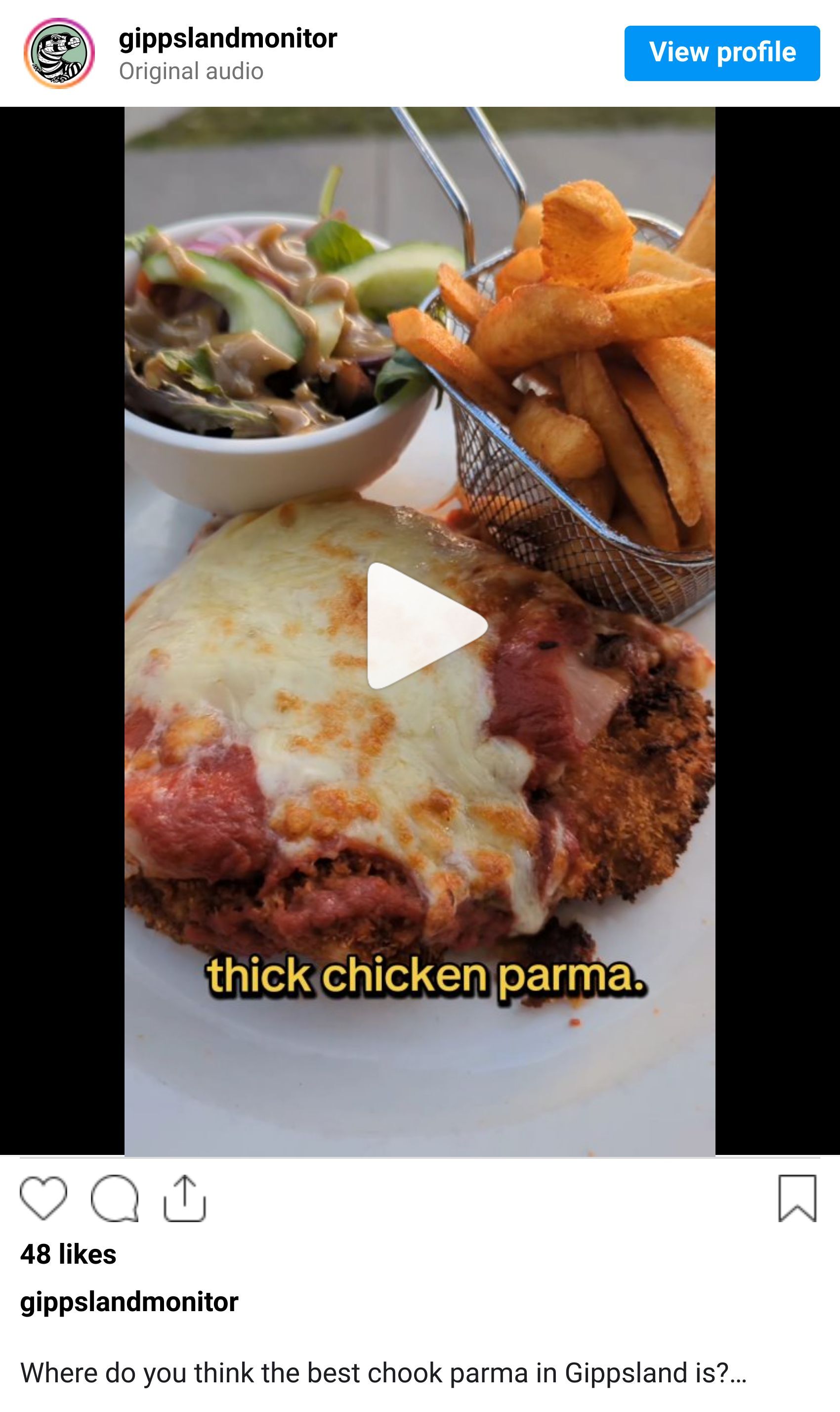
My review of The Inlet Hotel’s chicken parmigiana; and;
My colleague from the West Vic Brolga Zara Cuthbertson’s piece on Stawell’s former Literary and Scientific Institute.
📸 Before we dive in any further, on Tuesday night I drove down to Inverloch because I read there was a solar storm happening and there was a chance to catch a glimpse of an aurora.
Unfortunately, I didn’t manage to see any shining solar lights in the sky but I did snap a pretty nice pic of the sunset from The Oaks lookout.

✍️ Yesterday I wrote a story on new restrictions for cat owners in South Gippsland requiring cats to be confined to their owner’s properties around the clock.
I did some research into the impact of feral cats on Australia’s native wildlife and discovered some of the numbers are horrifying.
I knew feral cats were causing a lot of damage but a 2024 report from the Department of Climate Change, Energy, the Environment and Water found feral cats in Australia kill an estimated 1.5 billion native mammals and 1.1 billion invertebrates per year.
That’s 2,853 mammals killed by feral cats in Australia every minute.
They are apex predators. They do so much damage. The time of having cats wandering around, killing aimlessly, or even just playing with wildlife for fun is over.
🎊 WHAT’S ON THIS WEEK 🎟️
SATURDAY, 13/12/25 | Inverloch community Christmas carols
SATURDAY, 13/12/25 | Moe Christmas carols in the park
SATURDAY, 13/12/25 | Liz Stringer
SUNDAY, 14/12/25 | Christmas Carols Festival
SUNDAY, 14/12/25 | The Great Bass Christmas Party
SUNDAY, 14/12/25 | Grantville Christmas party and market
SUNDAY, 14/12/25 | Wonthaggi Community Carols
SUNDAY, 14/12/25 | Fish Creek Community Carols
🧺 FARMERS MARKETS 🥧
SATURDAY, 13/12/25 | Coal Creek Farmers Market
SATURDAY, 13/12/25 | Metung Market
SUNDAY, 14/12/25 | Longford Community Market
SUNDAY, 14/12/25 | Kongwak Market
🚀 Alright, let’s jump into the Monitor’s latest yarns, local interviews and silly videos!

🔍 HEARD THIS WEEK👂
The Gippsland farm behind the production of the iconic and award-winning Tarago River Cheese is on the market for the first time in 90 years.
What’s in a farm: The 98-hectare farm runs across four titles in Neerim South. It encompasses the thriving dairy operation, which has for decades provided high quality milk to the cheese factory on the same site.
A winning history: The Trarago River farm has been in the Johnson family for generations. Rob and Lynette Johnson worked alongside now-retired cheese maker Laurie Jensen to pioneer and produce the Tarago River cheese in the 80s.
Using traditional methods, a blue, brie and farmhouse-washed rind cheese were created under the Tarago River Cheese name.

Cows grazing on the Tarago River property.
Rob and Lynette’s son, David Johnson, continued their legacy until late 2023, when Moondarra Cheese acquired Tarago River Cheese.
Johnson is now seeking to let go of the final piece of this historic and iconic property by selling the farm.
🗣️ “This has been in motion for probably four or five years,” Johnson told the Monitor. “We've got three kids. It's very difficult to pass it on or sell the farm down to the kids. So, we’ll try and realise the value we've got, and maybe go elsewhere if we need to.”
“I’m quite comfortable with it. I see a lot of older farmers that leave it all too late, and I'd rather do it early than do it too late.”

Tarago River Cheese farm owner David Johnson.

The days of letting Snuffles roam free are over in South Gippsland, with the shire becoming the latest Victorian council to require cats be contained to properties at all times.
What happened: During a December 10 council meeting, South Gippsland unanimously voted to strengthen its Domestic Animal Management Plan to require cats to be confined to properties around the clock.
Councillor Sarah Gilligan moved to amend the draft Domestic Animal Management Plan 2026-29, changing the cat containment order from a sunset-to-sunrise restriction to a 24/7 cat containment order.
🗣️ "They are apex predators. They do so much damage," Gilligan said. "The time of having cats wandering around, killing aimlessly, or even just playing with wildlife for fun is over."
“I believe it’s every cat owner's responsibility to make sure their cat is contained to their property 24 hours a day.”
🗣️Councillor Brad Snell backed the change saying: "I've lost count of the amount of times I've been wandering around parks and gardens and in the bush and I've seen that nice little cluster of feathers where a bird once was."
How big a problem are feral cats in Australia?
Feral cats are now present across 99.9 percent of Australia and kill an estimated 1.5 billion native mammals and 1.1 billion invertebrates per year, according to a 2024 report from the Department of Climate Change, Energy, the Environment and Water.
That’s 2,853 mammals killed by feral cats in Australia every minute.
The report found that feral cats have already directly contributed to the extinction of more than 20 native Australian mammals, including the Rusty Numbat, the Desert Bandicoot, the Broad-faced Potoroo and the Crescent Nail-tail Wallaby.

From giant earthworms, chunky snot blocks and the Ladies of the Swamp, to nuclear protests, the Federal Election and beautiful old bridges, it’s been a big year at the Gippsland Monitor.
We launched in February, and this was my first job as a journalist. It was also my first job as a vanilla slice and meat pie reviewer.
I have been pleasantly surprised at the way stories can have an impact on people’s lives, and the extent to which the communities we serve are hungry for local news.
One such yarn was on the severe coastal erosion experienced by the residents in the Phillip Island suburb of Silverleaves.
The Silverleaves coastline has receded by about 77 metres since 1953 and is continuing to recede by six metres a year, potentially threatening the stability of homes near the water.
I interviewed Silverleaves resident Ken Haley at Silverleaves Beach. Haley is worried that as the coastline continues to recede residents - many of them older - may be forced to relocate permanently.
That video connected with people all over Gippsland, where severe weather events are not unusual.
Letting locals have a say is hugely important. It can paint a vivid picture to illustrate under-reported stories and let people know that the challenges they face are often universal.
Journalism allows you to stick with a story over days, weeks and months. Recently, I followed up on this story when $18.4 million in funding was announced for coastal protection works across Gippsland from the state and federal governments, including in Silverleaves.
This is not the end of the story, and as the Monitor heads into 2026, it’s one of the many issues I will be keeping an eye on.
I will also continue trying to shovel a whole vanilla slice into my gob. It’s a messy job, but someone’s gotta do it.


LOOKING NATIONALLY 👀
I really enjoyed this piece my colleague Zara Cuthbertson at the West Vic Brolga put together on the history of the Stawell literary institute building.
I’m always keen to learn about a regional town’s history and Zara did a great job of summarising the long and storied history of the heritage listed former literary and scientific institute.
Check out the story below.

🎥 Watch: The Inlet Hotel’s chook parma review 🐓
I have been known to enjoy a chicken parmigiana on occasion so when I passed through Inverloch I couldn’t resist taste testing The Inlet Hotel’s parm. Take a look at my video review below.

Thanks for catching up with us this week at the Monitor. I hope you enjoyed this Friday issue of our newsletter.
📷 I’m putting some social media posts together about how stunning the Gippsland region is for the holidays. If you’d like to share the best photo you’ve taken in Gippsland this year then feel free to send it through to [email protected] and you might see it on our socials.
None of our work happens without reader support. If you’re able to contribute to keeping local news free in Gippsland, we will be very grateful.
Have a great weekend everyone 👋
Cheers,
Jacob
